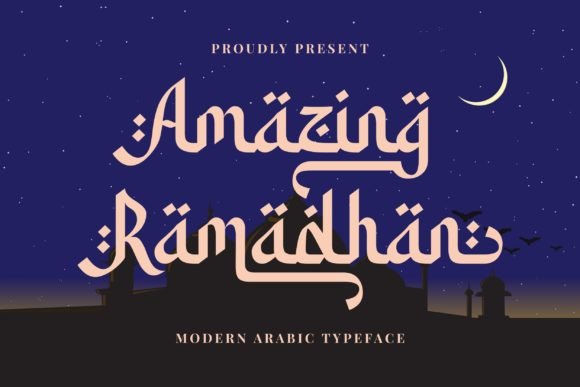
Amazing Ramadhan: A Stylish Arabic-Style Font for Script Handwritten Campaign Designs
While designing a recent Instagram content series for a lifestyle brand’s Ramadan campaign, I needed a font that felt personal, culturally relevant, and visually engaging. I stumbled upon Amazing Ramadhan, a script handwritten font with a natural, casual flow that immediately caught my eye. After testing it across multiple campaign assets—from Instagram Stories to email banners—I found it delivered a strong visual impact without sacrificing readability.
Amazing Ramadhan for Instagram Posts and Ramadan-Themed Social Media Graphics
One of the first places I used Amazing Ramadhan was in a set of Instagram posts promoting a limited-time Ramadan offer. The font’s Arabic-style strokes gave the design an authentic, warm feel that resonated with our target audience. Since the font is designed for short, impactful text like headlines and quotes, it worked perfectly in carousel headers and quote-based Stories.
I paired it with a clean sans-serif for body text to maintain visual hierarchy and ensure the message was easy to digest. On mobile previews, the cursive style remained legible, especially when used at 24px or higher. For best results, I recommend using it on light or semi-transparent backgrounds to keep the script from blending in or looking too busy.
Using Amazing Ramadhan in YouTube Thumbnails and Reels Covers
For a client’s YouTube channel, I tested Amazing Ramadhan in thumbnail designs for a Ramadan recipe series. Since thumbnails need to grab attention quickly, I used the font in bold white text over a dark overlay. The result was visually striking and culturally appropriate for the content.
The font’s casual elegance made it stand out without overpowering the visuals. It performed especially well when used in short phrases like “Ramadan Special” or “Iftar Ideas.” However, I noticed that very small thumbnails (below 100px) reduced legibility, so I reserved the font for larger text blocks and avoided using it in tight layouts.
Amazing Ramadhan for Email Banners and Digital Ad Layouts
During a recent email campaign promoting a Ramadan sale, I integrated Amazing Ramadhan into the header banner. The font’s decorative strokes gave the email a handcrafted, approachable tone, which aligned well with the brand’s voice. I used it in a gradient gold shade to evoke celebration and warmth.
In digital ads, I applied the font in a similar way—using it for primary headlines and pairing it with a minimalist sans serif for supporting text. The contrast helped guide the viewer’s eye and reinforced the message hierarchy. However, I advise caution when using it in fast-scrolling environments like Facebook or Instagram feeds. It works best when given enough visual space and not buried under too many other design elements.
Font Pairing and Readability Tips with Amazing Ramadhan
As a script handwritten font, Amazing Ramadhan shines when paired with clean, modern typography. I found that using it with a font like Montserrat or Lato helped balance the ornate style and created a cohesive look across campaign materials.
It’s also important to consider where the font will be used. While it’s excellent for headlines, logo-style text, and quote graphics, it’s not ideal for long-form content or small body copy. Stick to using it for display text, promotional callouts, and decorative titles where visual appeal matters more than extended readability.
Commercial Use and Font Licensing Considerations
Before deploying Amazing Ramadhan across client projects, I double-checked the font licensing to ensure it allowed for commercial use. Most premium script handwritten fonts come with clear usage guidelines, and this one was no exception. It supported use in digital ads, branded templates, and social media graphics, which made it a solid choice for campaign assets.
I also verified that the font package included multiple weights and alternate characters, which added flexibility to the design. If you're using it for multilingual campaigns, confirm whether it supports extended character sets or Arabic language glyphs, as that can impact its usability across different markets.